
Can a Building Do More Than Avoid Harm?
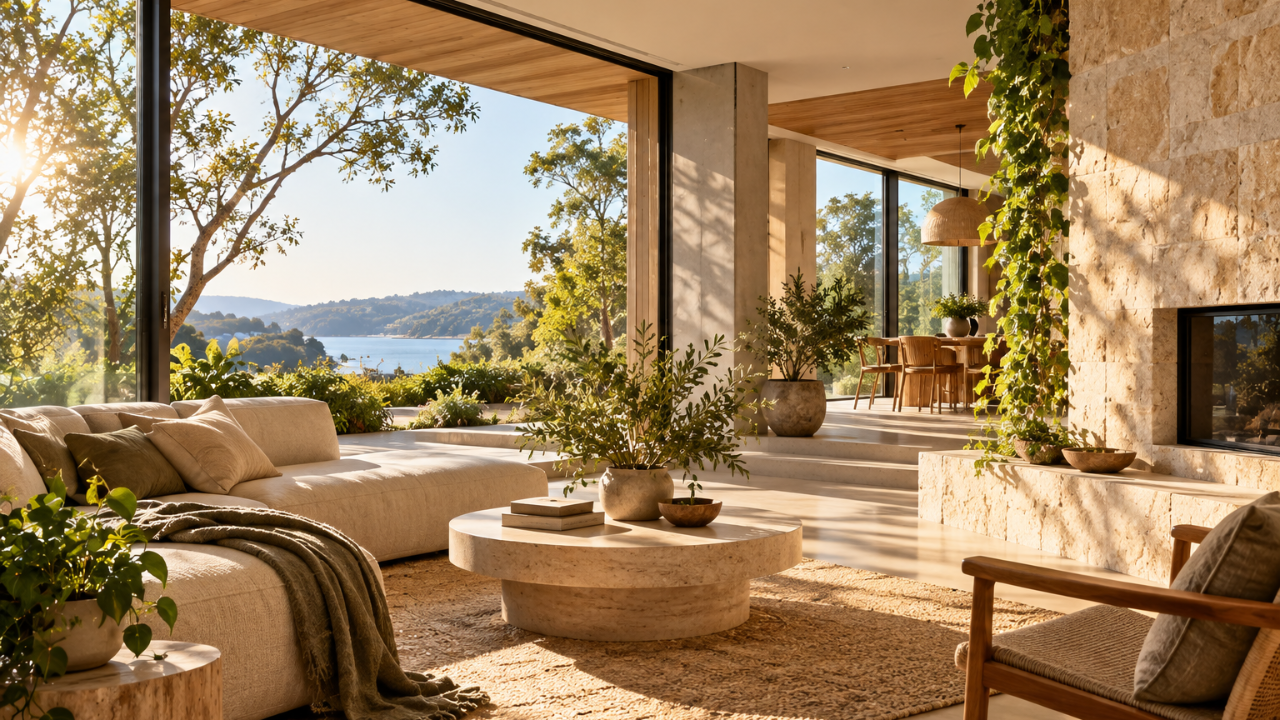
Can a Building Do More Than Avoid Harm?
Healthy building has traditionally been framed around reducing risk.
Remove hazardous materials. Improve ventilation. Prevent mould. Reduce pollutants. Manage moisture. Avoid unnecessary chemical exposures.
All of these things matter.
But they raise a bigger question.
Is the absence of harm really the highest standard we should expect from the places we create?
A building can be technically safe, compliant and relatively low in environmental hazards, yet still feel uncomfortable, overstimulating, disconnected or simply indifferent to the people inside it.
The next evolution of healthy building asks something more ambitious:
Can the built environment actively support human wellbeing?
From Less Harmful to More Supportive
Much of building science is understandably concerned with preventing failure.
We design to prevent water ingress, condensation, overheating, structural problems, excessive energy use and poor indoor air quality.
Healthy-building practice adds another layer by considering chemical exposures, material health, mould, electromagnetic environments and other factors that can influence occupants.
These approaches are essential.
But preventing negative outcomes is different from creating positive ones.
A building that does not make people unwell has achieved something important. A building that also supports comfort, restoration, concentration, sleep, connection and a sense of place has achieved something more.
That distinction is where healthy building begins to intersect with human-centred and restorative design.
Health Is More Than the Absence of Exposure
Indoor environmental quality is often discussed through measurable exposures.
Particulate matter. Volatile organic compounds. Carbon dioxide. Humidity. Temperature. Noise. Light.
Measurement matters because it allows us to identify conditions that may affect health or comfort.
But people do not experience buildings as a collection of individual metrics.
We experience the whole environment.
We notice whether a room feels stuffy. Whether daylight reaches us. Whether sound reverberates. Whether the temperature feels stable. Whether surfaces feel warm or cold. Whether there is somewhere quiet to retreat. Whether we can see the sky, trees or changing weather.
A healthier environment therefore needs both technical performance and human experience.
Comfort Is Not a Luxury
Comfort is sometimes treated as an aesthetic preference or an optional layer added after the technical work is finished.
In reality, comfort sits at the intersection of multiple building systems.
Thermal comfort is influenced by air temperature, radiant temperature, humidity, air movement, clothing and activity.
Acoustic comfort depends on sound transmission, reverberation, background noise and the activities occurring around us.
Visual comfort is influenced by daylight, glare, artificial lighting and contrast.
Indoor air affects how fresh or oppressive a room feels.
When these conditions are considered together, comfort becomes part of building performance rather than decoration.
A building that consistently requires occupants to tolerate glare, drafts, noise, overheating or poor air is asking people to adapt to the building.
A more human-centred approach asks how the building can adapt to people.
Nature Changes the Experience of Place
This is one reason biophilic design has become increasingly relevant.
Human beings evolved in environments characterised by changing daylight, vegetation, natural materials, variation, texture, views, weather and seasonal rhythms.
Modern buildings can remove much of that experience.
Artificial lighting replaces daylight. Sealed interiors reduce contact with outdoor conditions. Highly processed materials replace natural texture and variation. Views may disappear entirely.
Biophilic design attempts to restore some of that connection.
That can include:
- access to daylight
- views of vegetation or landscape
- natural materials and textures
- patterns and forms that reference nature
- access to outdoor spaces
- changing light and shadow
- natural ventilation where appropriate
- water and planting
- spatial variation, refuge and prospect
But, as with material health, the goal should not simply be to reproduce the appearance of nature.
The deeper opportunity is to create environments that reconnect people with natural processes and sensory conditions in meaningful ways.
Materiality Shapes Experience
Materials influence much more than chemical exposure.
They affect acoustics, temperature, light, texture, ageing and the emotional character of a space.
Timber feels different from laminate.
Lime plaster interacts with light differently from highly uniform synthetic coatings.
Stone carries thermal mass and tactile qualities that cannot be separated from its visual appearance.
Textiles can soften acoustics and change how a room feels.
Material selection therefore sits at an interesting intersection between health, performance and experience.
A restorative material palette is not simply a collection of products that look natural.
It considers:
- what materials contain
- what they emit
- how they respond to moisture
- how they age
- how they feel
- how they interact with light
- how they affect acoustics
- how they contribute to the character of a place
This is where material health and human-centred design begin to overlap.
Light Is Both Technical and Biological
Lighting provides another example of why healthy-building thinking needs to extend beyond hazard reduction.
We need enough light to see safely and perform tasks. But light also influences biological rhythms and our perception of time and place.
Daylight changes continuously throughout the day.
Its intensity, direction and colour vary with time, weather and season.
Many indoor environments flatten that experience into relatively constant artificial illumination.
A more considered approach asks how architecture can provide useful daylight while managing glare, overheating and visual discomfort.
It also considers the timing, intensity and character of artificial lighting rather than treating illumination as a single numerical requirement.
The goal is not simply a brighter building.
It is a building that responds more intelligently to human visual and biological needs.
Sound Shapes Wellbeing Too
Acoustics are frequently overlooked in discussions about healthy buildings.
Yet unwanted or persistent noise can affect concentration, communication, sleep and stress.
Hard surfaces can create visually beautiful spaces that are acoustically exhausting.
Open-plan environments can encourage interaction while simultaneously making privacy and concentration difficult.
Mechanical equipment can provide essential ventilation while producing intrusive background noise if poorly designed.
A more restorative environment considers both the presence and absence of sound.
Where should conversation be encouraged?
Where should quiet be protected?
How can materials, layout and building systems support both?
Acoustic comfort is another reminder that human wellbeing emerges from the interaction of many design decisions, not a single healthy-building feature.
Restorative Does Not Mean “Spa-Like”
The word restorative can easily become another design aesthetic.
Muted colours. Timber. Stone. Plants. Soft lighting.
Those things may contribute, but restorative design is not a style.
A restorative place is one that helps reduce unnecessary demands on the people occupying it and supports the activities the space exists for.
In a home, that might mean supporting rest, sleep, concentration and family life.
In hospitality, it might mean creating an environment where guests can genuinely recover from travel and overstimulation.
In a workplace, it may involve supporting focus, collaboration and opportunities for respite.
Different places require different conditions.
That is why restorative design needs to begin with people rather than appearance.
Buildings Are Experienced Through the Senses
We often describe buildings visually because architecture is communicated largely through drawings and photographs.
But occupants experience buildings through multiple senses simultaneously.
We feel temperature.
We hear mechanical systems and neighbouring rooms.
We notice air movement.
We smell materials, cooking, cleaning products and outdoor air.
We touch surfaces.
We perceive brightness, shadow and colour.
We sense enclosure, openness, privacy and connection.
Human-centred healthy building therefore needs to consider the sensory environment as a whole.
This does not replace measurable building performance.
It complements it.
A More Complete Definition of Healthy Building
A healthier building should still minimise avoidable hazards.
It should manage moisture.
It should provide good ventilation.
It should use materials thoughtfully.
It should perform thermally.
It should address indoor pollutants and other environmental exposures.
But perhaps that is the foundation rather than the destination.
The next question is what happens once those fundamentals are in place.
Can the building support comfort?
Can it provide connection to daylight and nature?
Can it offer both stimulation and refuge?
Can its materials contribute positively to sensory experience?
Can it support the activities, rhythms and needs of the people using it?
Can it help people feel better after spending time there rather than simply no worse?
Towards Restorative Environments
The future of healthy building is unlikely to belong to one discipline.
Building Biology contributes an understanding of environmental exposures and the relationship between buildings and human health.
Building science contributes knowledge of moisture, thermal performance, ventilation and the behaviour of building assemblies.
Material health examines ingredients, emissions, transparency and lifecycle considerations.
Biophilic design explores the human relationship with nature.
Human-centred design begins with the needs and experience of people.
Taken together, these disciplines suggest a broader ambition for the built environment.
Not simply buildings that do less harm, but places that actively support the people within them.
That is a much more demanding standard.
It is also a more interesting future for healthy building.
Annie Scog is the founder of Healthy Home Expert. Her work explores the intersection of material health, Building Biology, building performance and human-centred design, with a growing focus on biophilic and restorative environments.